
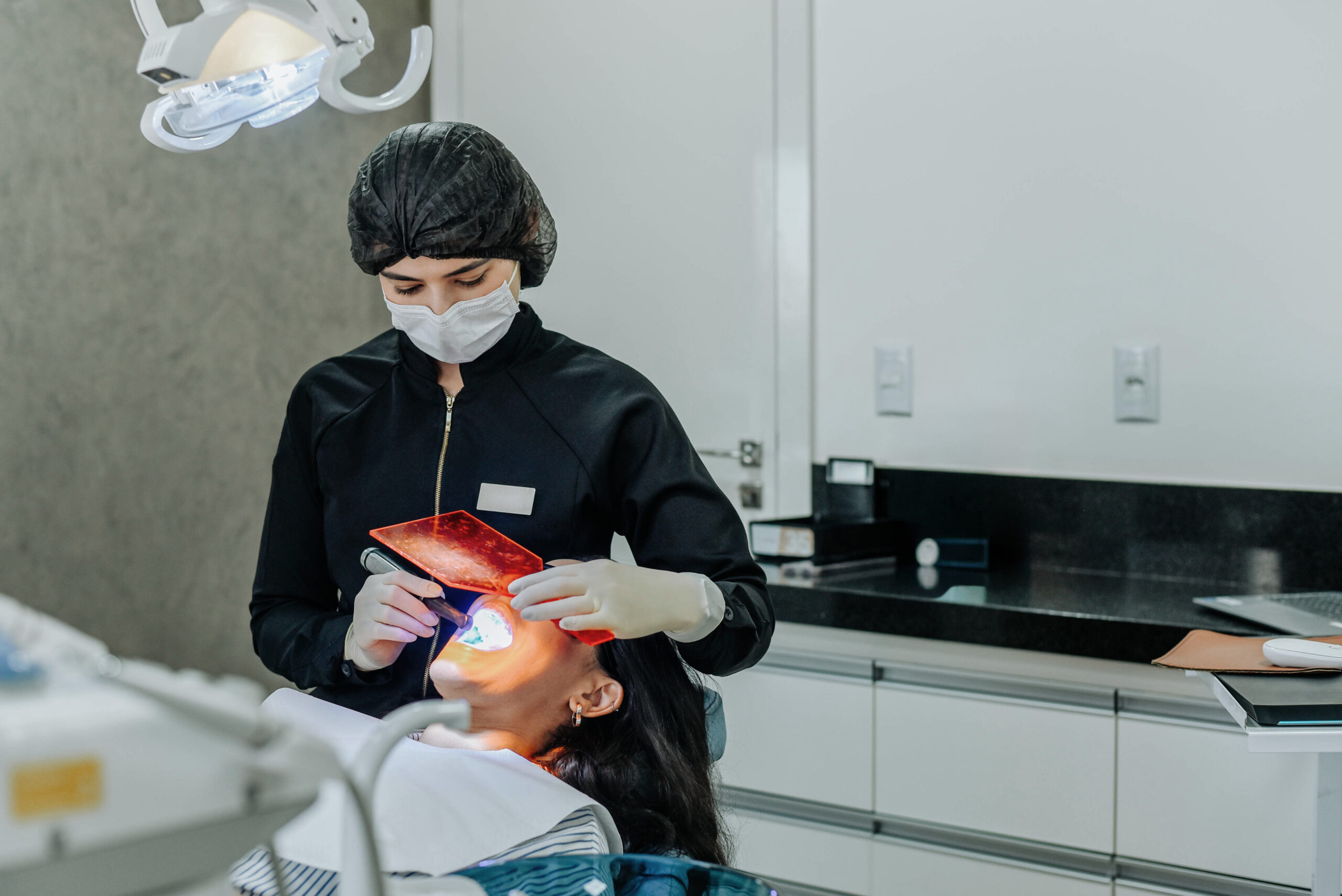
Digital impressions are 3D scans of your teeth, gums, and bite created using a small intraoral scanner, a wand-like device that your dental team glides gently around your mouth. As it moves, it captures thousands of images per second and assembles them into a highly detailed 3D model of your oral anatomy. This model is then used to design restorations, plan orthodontic treatment, evaluate bite alignment, and guide a wide range of dental procedures.
How Intraoral Scanning Works
The process is straightforward and comfortable. You sit back in the chair, and a team member slowly guides the scanner around the upper and lower arches of your mouth, capturing everything in real time. Within minutes, a full digital replica of your teeth appears on the screen, one that your dentist can rotate, zoom in on, and analyze from every angle. There are no materials to mix, no trays to gag on, and no waiting for impressions to set.
The digital model is then sent electronically to a dental lab or loaded directly into our in-office CEREC system, where it becomes the blueprint for your restoration or treatment plan. As noted in research published by the National Library of Medicine, intraoral digital scanners have demonstrated strong accuracy and reliability for a broad range of clinical applications, supporting their growing use across modern dental practices.